
Prop Desk to Curator: JPEG Trading's Security Evolution With Blockaid
Overview
Summary
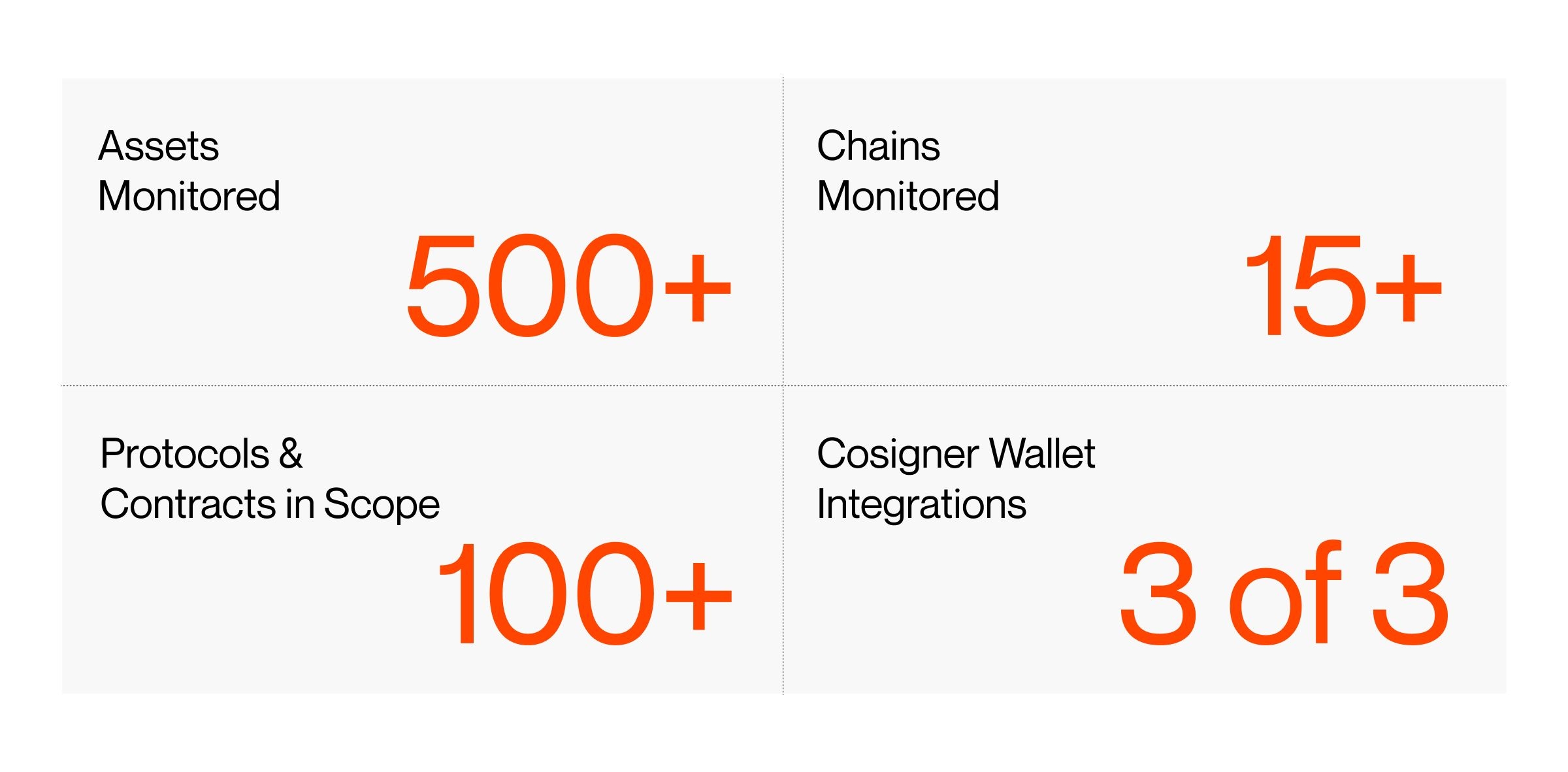
- JPEG Trading runs a fast-moving prop book across 100+ protocols and 15+ chains, including non-EVM chains most security vendors don't cover.
- JPEG’s existing MPC signing setups had no pre-transaction defense against malicious contract interactions, and risk monitoring was manual and slow.
- Blockaid's Cosigner added real-time transaction screening across all of JPEG’s wallet infrastructure providers, while Onchain Monitoring covered the full asset inventory, including DeFi vault exposure.
- With that security foundation in place, JPEG expanded from prop trading into vault curation, defining the vault strategy and managing the liquidity for tGLD as its first curated market with the risk posture needed to attract deposits from external customers.
About JPEG Trading
JPEG Trading is a proprietary trading firm whose curation arm specializes in evaluating assets that require niche technical, market structure, or financial diligence. Aside from managing its own onchain book and venture investments, JPEG Trading partners with protocols and asset issuers to build holistic and active markets for their assets through liquidity, curation, and investment.
The Challenge: Finding a Security Provider that Fits the Workflow, Not the Other Way Around
For its prop trading and liquidity provisioning, JPEG trading manages numerous positions that span many different tokens across different protocols and blockchains. JPEG Trading also tends to be an early adopter of emerging DeFi protocols and blockchains, including non-EVM chains which typically have less tooling and support from security providers compared to Ethereum & other EVM chains. The firm transacts frequently onchain and runs its DeFi operations through different MPC (multi-party computation) workspaces and multi-sigs for transaction signing.
After witnessing major exploits across centralized exchanges and DeFi protocols, JPEG Trading looked to reinforce the security around its wallet setup by adding pre-transaction co-signing to block malicious interactions, which was a detection gap with its MPC wallet. Their existing monitoring process for risks and exploit detection was an operational burden, using a mixture of internally produced tools for manual and automated checks.
Given the scope of their activities and operational setup, the team prioritized several factors when evaluating security vendors, including:
- detection capabilities against threats both onchain and offchain,
- integration with each of its wallet providers used in their existing workflow,
- breadth of coverage including for non-EVM chains,
- level of support and response time when a request is made to add a new protocol, and
- the vendors’ own data privacy and opsec readiness.
The Solution: Integrated Threat Protection and Monitoring Where It’s Needed
JPEG opted to go with Blockaid, where Cosigner was a meaningful differentiator. Cosigner supports all wallet providers used in their DeFi operations, with per-platform policies managed from one place. Every transaction is simulated and validated in real time before a signature is released: the engine evaluates what a transaction actually does and who it actually touches, with intelligence and detection precision backed by Blockaid’s leading customer data network. On top of the default threat-intelligence rule, JPEG layers in its own Cosigner policies that mirror how the desk segregates risk: operational wallets restricted to approved venues and address whitelists, notional limits on swaps, and separately-policied wallets for various DeFi activities.
While Cosigner protects at the point of signing, JPEG's positions live onchain around the clock. Blockaid's Onchain Monitoring watches the full inventory of assets across 30+ chains (including Solana, Sui, TRON and other non-EVM blockchains), providing pre-configured monitors plus custom rules around DeFi protocols, including Morpho and Euler vaults used to earn yield. Onchain Monitoring also offered insight and alerting around the underlying assets that each vault had exposure to, providing the earliest detection signals for JPEG Trading in case of rapid changes in market conditions. Detections create real-time alerts into shared channels, and Blockaid's threat intel team investigates jointly with JPEG’s response team when something fires.
Meeting Heightened Risk and Security Requirements as a Vault Curator
With the advanced monitoring and detection capabilities embedded into its workstreams, JPEG Trading looked to expand into a new line of business with vault curation. Compared to running its own prop trading book, asset curation opens strategy managers to third party depositors, which requires elevated risk and security standards.
With Blockaid having proven out its capabilities over several months, JPEG formally entered vault curation in June 2026 with the launch of its first tokenized gold vault. The underlying asset, tGLD, is issued by Tenbin Labs on its tokenization issuance platform and is backed by CME gold futures held in cleared margin rather than physically vaulted bullion. JPEG selects the markets and manages liquidity around it. Its tGLD vault on Euler is where JPEG's risk work sits — setting collateral, oracle, LTV and supply parameters, and monitoring the positions borrowing against it. The vault turns an otherwise static gold token into a productive collateral asset. Reflecting its conviction in its first curated product, JPEG maintains balance sheet exposure to tGLD.
The Results
- Automated pre-signature screening replaced manual, contract-by-contract diligence as the default path for every trade.
- Direct integration with the signing UI removes manual checks from the workflow entirely, freeing up employee time.
- Coverage has scaled as JPEG Trading has grown, with 500+ assets under scope across 15+ chains and dozens of active custom monitors. Assets that flow through Cosigner are tagged into the monitoring inventory automatically.
Outlook
JPEG Trading's work with Blockaid shows how security can be an accelerant for the business, rather than a drag. Blockaid replaced manual diligence with automated screening at the point of signing and added monitoring that fit into JPEG’s existing workflow. As a result, the same systems that protected a prop trading book now underpin a vault curation business for external depositors alongside its own. As JPEG builds further into onchain products, that infrastructure is built to grow with it: auto-discovery of new positions, AI-assisted policy generation, and programmatic coverage that keeps pace with the portfolio.
Ready to see how Blockaid can protect your platform? Request a Demo →
Blockaid is securing the biggest companies operating onchain
Get in touch to learn how Blockaid helps teams secure their infrastructure, operations, and users.